


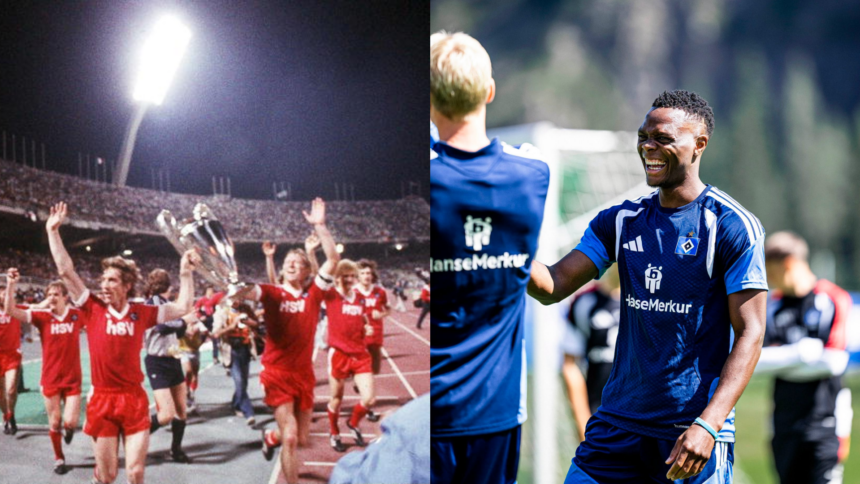
Bundesliga side Hamburger SV (HSV) confirmed the signing of Zambian striker Patson Daka on a free transfer after he agreed to a one-year deal with an option to extend. He joins the German side after spending five years at English outfit Leicester City, where he scored 29 goals in 165 matches across all competitions.
HSV currently compete in the German topflight, where they finished 13th last season on their return to the Bundesliga under Merlin Polzin. They will be banking on their new acquisition, Daka, to get them goals in the 2026-27 campaign and help maintain their topflight status.
While not as globally recognised as German clubs FC Bayern Munich or Borussia Dortmund, HSV has a rich football history.
BolaNews reveals four interesting facts about HSV which you probably did not know.
European Glory
In 1983, under the stewardship of Ernst Happel, HSV were crowned the European Cup winners after beating Juventus 1-0 in the final at the Olympic Stadium in Athens, Greece. The European Cup, of course, is now what is known as the UEFA Champions League.
Felix Magath netted the winning goal in the 9th minute with a jaw-dropping left-footed thunderbolt from outside the box. HSV defeated a star-studded Juventus outfit consisting of six recent FIFA World Cup winners (including Dino Zoff, Paolo Rossi and Marco Tardelli) and future three-time Ballon d’Or winner Michel Platini.
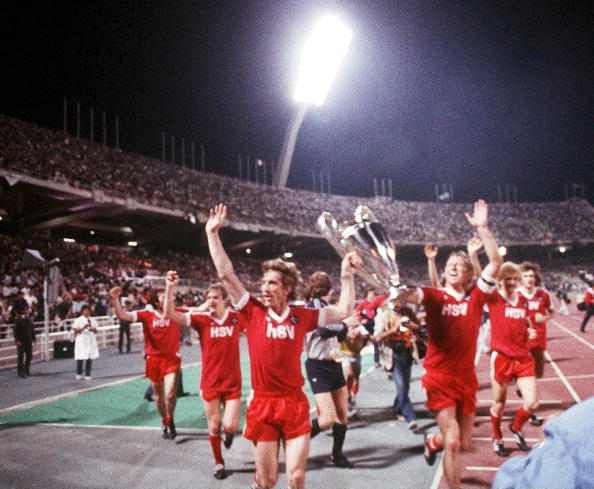
The club also famously won the UEFA Cup Winners’ Cup in 1977 and has amassed six league titles and five domestic cups.
Dinosaur Nickname
Being one of the oldest football clubs in the world, HSV earned the nickname ‘Der Dinosaurier’ which means The Dinasour, referring to the enormous reptilian creatures that are believed to have existed during the Mesozoic Era, millions of years before humans.
SC Germania, founded in 1887, merged with Hamburger FC and FC Falke in 1919 to form HSV. This was because the three clubs could not sustain themselves independently after World War I owing to reduced financial capacity and human resources.
Bundesliga Non-Relegation Streak
Up until 2018, HSV were the only club to have competed in every season of the Bundesliga since it was founded in 1963 without ever getting relegated. Their streak ended during the 2017-18 Bundesliga season when they got demoted after finishing in 17th place.
Despite beating Borussia Mönchengladbach 2-1 on the final day, a 4-1 win by VfL Wolfsburg over FC Köln confirmed HSV’s relegation. Prior to their relegation, HSV had a famous clock that displayed the number of years, days, hours, minutes and seconds they had been in the Bundesliga. It officially stopped at 54 years, 261 days, 00 hours, 36 minutes and 02 seconds.

After seven years of battling to return to the topflight, Die Rothosen got promoted during the 2024-25 2. Bundesliga season. Last season was their first campaign in the topflight since 2018.
Volksparkstadion’s Political Classic
HSV play their home matches at the 57,000-capacity Volksparkstadion and have been doing so since 1963. They have played some memorable matches there, hosting the likes of FC Barcelona, Juventus, Bayern Munich, Arsenal and Atletico Madrid.
The most iconic match ever played at the Volksparkstadion was actually during the 1974 FIFA World Cup staged in Germany. On June 22, 1974, West Germany faced East Germany in a Group 1 clash.
In what was one of the most politically charged matches of all time, East Germany carried the day, defeating West Germany 1-0 through Jürgen Sparwasser to finish top of the group. That remains the only time the two nations ever met in an international match.
Ironically, West Germany went on to win the whole tournament after beating the Netherlands in the final.