


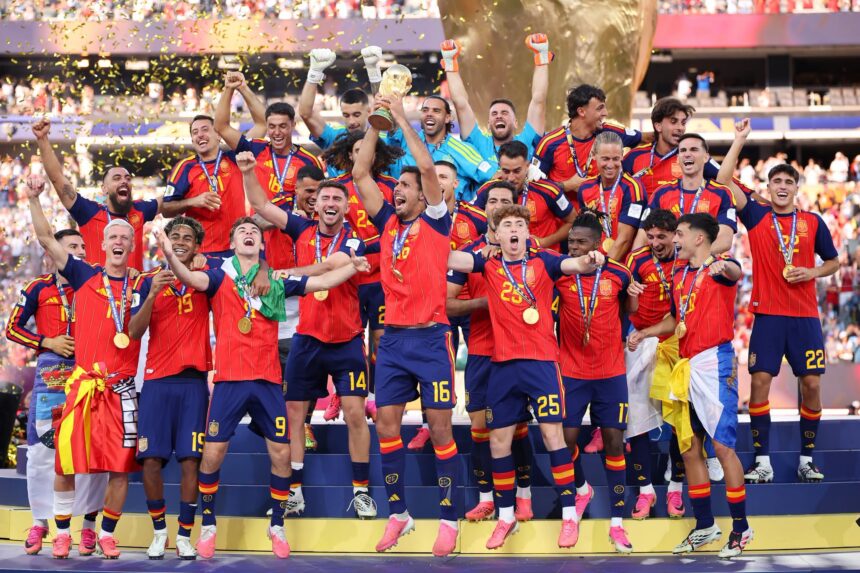
Spain were crowned world champions for the second time in their history on Sunday night in New York after a commanding 1-0 extra-time victory over Argentina.
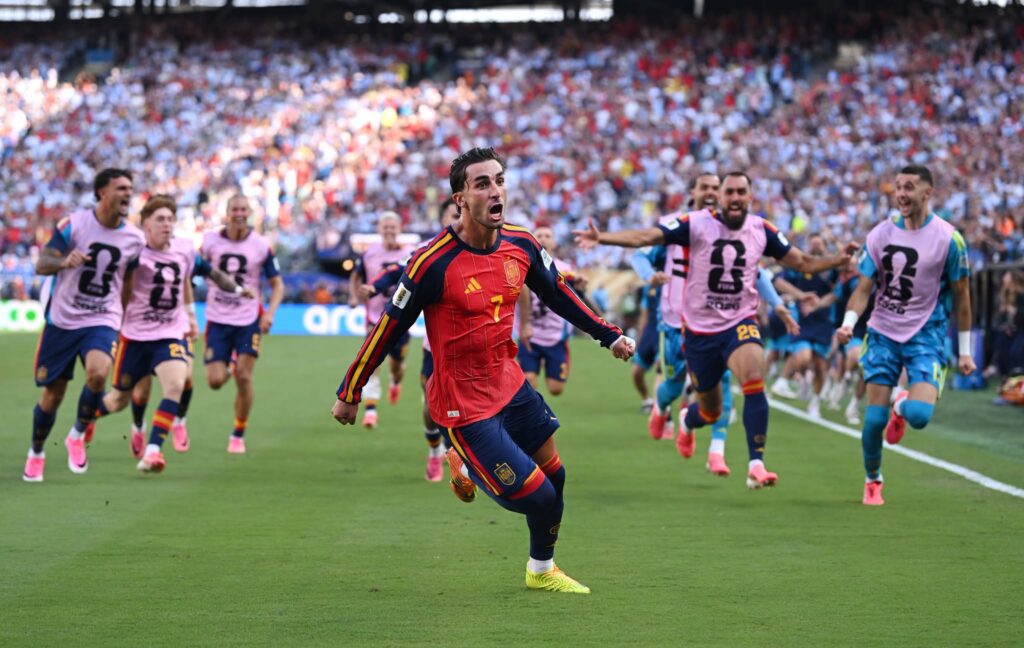
Substitute Ferran Torres scored the decisive goal in the 106th minute as Spain overcame 10-man Argentina to lift the FIFA World Cup.
Argentina’s resistance was largely built on the brilliance of Emiliano Martínez, who produced a string of crucial saves in both normal and extra time. However, he was finally beaten when Nico Williams kept the ball in play with a header into the box, allowing Torres to smash his finish into the roof of the net.
Spain’s dominance had already been underlined by Argentina’s lack of attacking threat. Even before Enzo Fernández was sent off in the third minute of second-half stoppage time for a dreadful foul on Pau Cubarsí—having earlier been booked for dissent—the South Americans failed to register a single shot in normal time, becoming the first team on record to do so in a World Cup final since 1966. Lionel Messi played only a peripheral role throughout the contest.
Spain outclassed Argentina with two goals disallowed
The final also featured two disallowed goals for Spain. Nico Williams thought he had opened the scoring in extra time after finishing into an empty net, but the effort was ruled out for a foul by Mikel Merino on Nicolás Otamendi in the build-up. Torres later found the net again after scoring the winner, only for the strike to be disallowed for a marginal offside.

Argentina finally came out of their shell after conceding, but Giuliano Simeone squandered a glorious chance to force an equaliser as Messi fell short of winning a second World Cup.
Despite the late pressure, Spain held firm to seal the title, with Martínez’s outstanding performance ultimately proving insufficient to deny La Roja.
Martínez finished the final with a record 11 saves, the most by any goalkeeper in a World Cup final, but it was not enough to prevent defeat.
Torres’ winner mirrored Spain’s last World Cup final-winning goal, scored by Andrés Iniesta against the Netherlands in 2010, and made La Roja only the fourth team to win the UEFA European Championship and the FIFA World Cup back-to-back, joining Germany (Euro 1972 and 1974 World Cup), France (1998 World Cup and Euro 2000), and Spain’s own 2008-2012 golden generation.
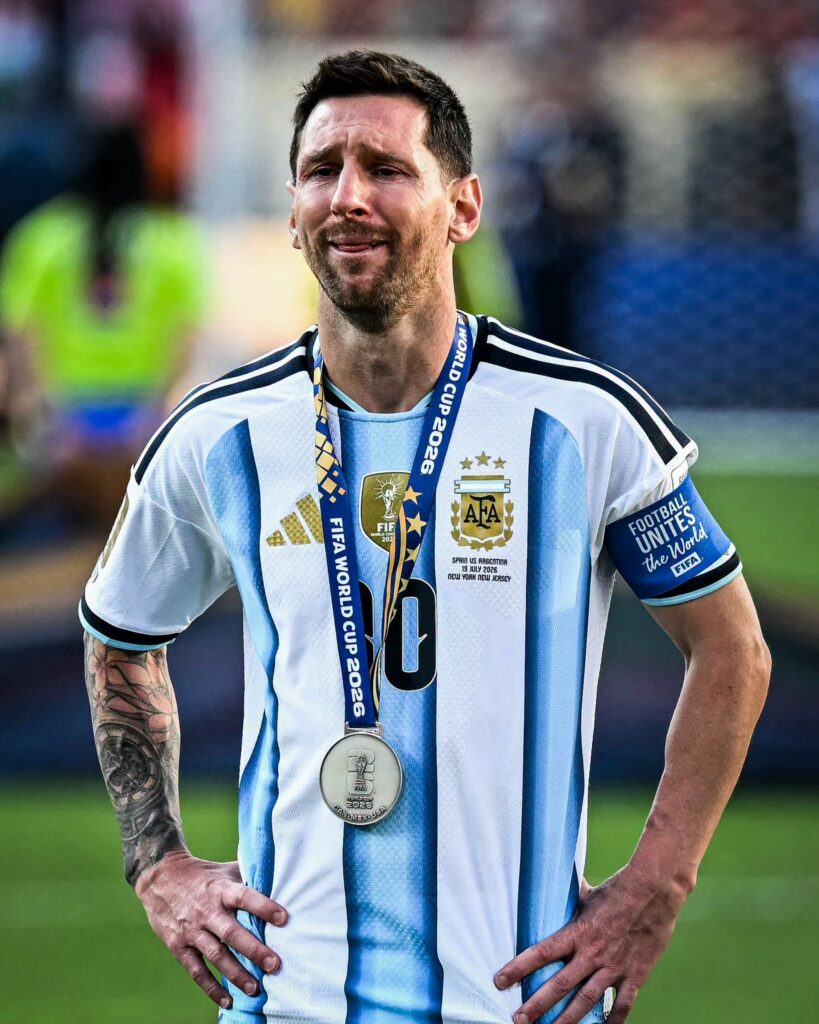
For Messi, the defeat may have marked his final World Cup appearance. The Argentina captain missed out on a second winners’ medal and also finished second in the Golden Boot race behind Kylian Mbappé, who became the tournament’s all-time leading World Cup goalscorer with 22 goals, one ahead of Messi’s 21.