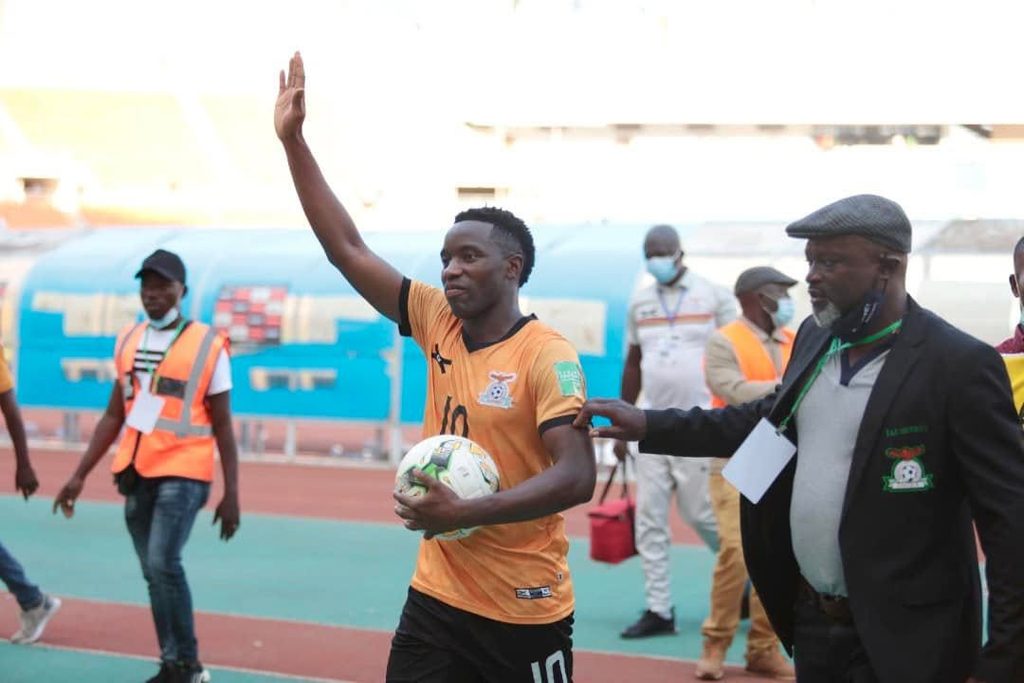
There is something unsettling about the timing of Fashion Sakala’s decision to retire from international football. Coming after Zambia’s disappointing 1-1 draw against Burundi in an AFCON qualifier, his announcement raises questions about leadership and responsibility.
Sakala is entitled to call time on his international career. Representing one’s country is a privilege, not an obligation, and footballers have personal and professional commitments beyond the game.
In his farewell statement, Sakala takes us back to his humble beginnings, recalling how, as a barefoot boy in Eastern Province, he dreamed of wearing the Zambian jersey. He remembers his father taking him to trials on a bicycle and describes captaining the Chipolopolo as one of the proudest moments of his life.
It is a moving account of a journey worth celebrating. However, that is precisely why the timing of his decision deserves scrutiny.
Leadership is easy when things are going well. It is easy to wear the armband when the team is winning, and supporters are singing your name. But leadership is tested when results are poor, confidence is low, and criticism becomes uncomfortable.
This is where Sakala’s decision leaves a bitter taste.
Zambia is in the middle of an AFCON qualifying campaign, a period when the team needs stability, experience and leadership. Yet, at a time when the ship appears to be taking in water, its captain has chosen to jump overboard.
A captain does not necessarily have to go down with the ship, but one would ordinarily expect him to remain at the helm until the immediate storm has passed.
Sakala has been among the players singled out by supporters following Zambia’s recent performances. While some criticism has been justified by what has been happening on the pitch, other reactions have crossed the line into personal attacks.
And here, we must acknowledge the human being behind the footballer.
Players are not immune to the pressures of public scrutiny. They have families, personal struggles and emotions that are not always visible to supporters. It is possible that the criticism directed at Sakala has weighed more heavily on him than many realise. We should not dismiss that possibility or pretend to know all the circumstances behind his decision.
There is a difference between demanding accountability and subjecting players to relentless personal attacks. We can question performances without stripping footballers of their dignity.
Perhaps Sakala has personal and professional reasons that make continuing with the national team difficult. His statement does not provide enough detail for us to conclude otherwise.
Nevertheless, understanding his circumstances does not mean we cannot question his timing as captain.
He writes: “Every time I put on that shirt, I wanted to give you a reason to be proud.”
Those are heartfelt words, and his pride in representing Zambia should not be doubted. His journey from a barefoot boy in Eastern Province to captaining the national team is one worth celebrating.
But perhaps the greatest opportunity to demonstrate leadership was when the country needed its captain most.
Zambia is bigger than any individual player. The Chipolopolo will move on, and another player will wear the armband. However, Sakala’s final chapter as captain will inevitably leave one difficult question: why leave in the middle of the battle?
He leaves with a childhood dream fulfilled, but perhaps not with the farewell one would have expected from a captain. And that is the unfortunate part of this story.