

As a continent that boasted an unprecedented knockout qualification rate of 90% (nine out of ten participants) after the 2026 FIFA World Cup group stage, Africa somehow managed to produce just one quarterfinalist.
Egypt’s controversial and dramatic exit against Argentina during the 2026 FIFA World Cup Round of 16 leaves Morocco as Africa’s only remaining representative at the global tournament. The Pharaohs squandered a 2-0 lead with only eleven minutes of normal time left to play, losing 3-2 to the world champions.
Questionable penalty decisions and a disallowed goal overshadowed a historic comeback by Argentina, with Egypt coach Hossam Hassan and player Mostafa Ziko insisting that the officials favoured Argentina. Well, it is not the first time during this tournament that a player or coach has suggested that the officiating was more in favor of the heavyweights than the underdogs.
So have the odds been stacked against African teams’ progress at this tournament or are they themselves to blame for their disappointing exits?
BolaNews discusses three reasons why African sides have struggled in the 2026 FIFA World Cup knockout stage so far.
Poor Game Management
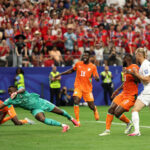
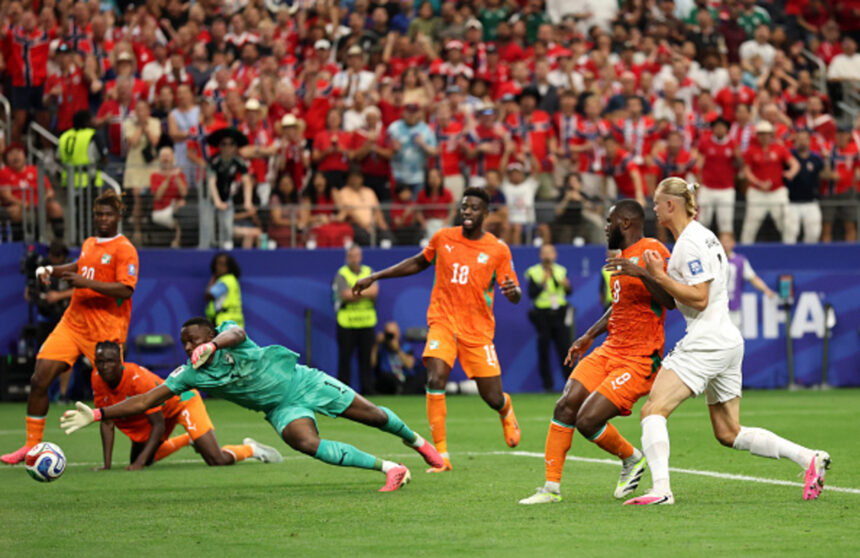
This is undoubtedly the most obvious reason. South Africa, Ivory Coast, D.R. Congo, Senegal, Cape Verde, and Egypt all fell to late goals in their knockout stage matches. South Africa conceded a 92nd-minute winner against Canada before Erling Haaland downed Ivory Coast with a goal in the 86th minute.
Two quick-fire goals from Harry Kane, including an 86th-minute winner, booted out D.R. Congo, who led for the vast majority of the game. Cape Verde, whose inclusion on this list feels harsh given how impressive they were against La Albiceleste, also let in a late goal.
Elsewhere, Senegal and Egypt both had 2-0 leads nearing the 80th minute mark but lost 3-2 to Belgium and Argentina, respectively.
The recurring theme of these matches was either the players losing concentration in the dying embers of the contest or the technical bench employing a low block, alias ‘parking the bus ‘, to defend a lead.
After knocking out Senegal, Belgium head coach Rudi Garcia said, “We know these teams lose their tactical structure towards the end of the match. We also know that at 2-0, they’d do anything to protect their goal, which, in my opinion, is a serious mistake.”
Following online backlash, Garcia clarified that his comments did not refer to African teams in particular but, generally, any side that opts to defend their lead by dropping deep.
Knockout Stage Inexperience
Five African sides, namely South Africa, Ivory Coast, D.R. Congo, Cape Verde, and Egypt, participated in the FIFA World Cup knockouts for the first time in their history.
The weight of the occasion seemed to get to the heads of the players representing their nations at such a high level. The predicament was not any different for countries like Algeria and Ghana, which last played FIFA World Cup knockout stage football over a decade ago.
In contrast, Morocco, fresh from a historic run to the 2022 FIFA World Cup semifinals, seems to be riding on the momentum and confidence of that unparalleled achievement.
The Atlas Lions have built on the foundation of their impressive performances in Qatar, where they knocked out heavyweights like Spain and Portugal before falling to France in the last four.
When it seemed like the Netherlands would send them packing in the Round of 32, Morocco found a way and edged them on penalties. They also had to grind against co-hosts Canada, thumping them 3-0 in the last 16 despite being under constant pressure throughout the match.
While long-term planning and investment have transformed Morocco into a competitive side, it’s hard to deny that the experience of playing at such a top level can be very helpful.
Lack of Decisive Superstars
When you come across a graphic of 2026 FIFA World Cup topscorers, you might have to scroll much further down before coming across an African player.
Of the 24 players to score at least three goals at the 2026 FIFA World Cup at the time of writing, only three were African. Ismaila Sarr (4 goals), Ismael Saibari and Yoane Wissa (both 3 goals) were the only players to manage that feat.
For a continent blessed with stars like Mo Salah, Sadio Mané, Omar Marmoush, Riyad Mahrez, Antoine Semenyo, Nicolas Jackson, Nicolas Pépé, etc., much more would be expected.
When the stakes are high, as in the FIFA World Cup knockout stages, you need your top players to pop up with moments of magic.
Messi’s stunning volley vs. Egypt, Mbappe’s match-winning penalty vs. Paraguay, Haaland’s thunderbolt vs. Brazil, and Kane’s super strike vs. D.R. Congo are a few examples of stars turning up to win games even when the overall performance did not catch the eye.
READ ALSO: Who Will Be Zesco United’s Next Coach? Club Begins Search for New Boss